


CHEF ANDRE' CHIARINI' WEB SITE
PHYSICS (AND CHEMISTRY) OF THE KITCHEN.

SUBJECT
(at the end you will find the booklet to download for free)
Everything is physics and everything is chemistry. These two sciences surround us in the daily life. Physics and chemistry of cooking are therefore obvious, or should be. Food science and technology is not just about industry and technologists.
Does it seem difficult to you? Posing with a constructive and positive attitude helps us to face things that are not complex challenges. Just feel like it!
The transformation of heat into work is what we do and some principles of thermodynamics explain them to us. Energy is neither created nor destroyed, but transformed… into food.
There are principles such as HOT, COLD, STRENGTH, DENSITY that are present in the kitchen, both in professional and home cooking.
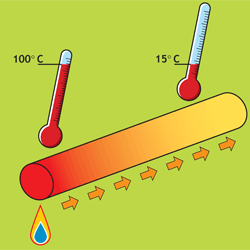
Many cooking systems concern the transformation of heat. For example, many ovens have a fan that circulates hot air within the oven cavity to distribute heat by forced convection. Who would have thought that they don't work like others, by radiation? Or that a refrigerator uses the transfer of heat energy through the process of convection and conduction to remove heat from the inside and keep it at a lower temperature than the outside environment?
The thermal differential is what is produced with the searing or browning phase.
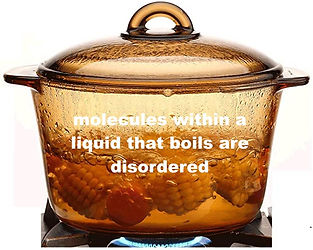
Who would say that during cooking energy tends to be distributed in a more disordered way with a relatively high entropy. Sounds like a complex word entropy. It comes from the Greek. en "inside" and “tropḗ" upheaval, mutation. And I hope this topic can change you inside, making you love physics in the kitchen.
Density is important when we talk about EMULSIONS which can be a simple vinaigrette or a mayonnaise or a cream with mascarpone for tiramisu or other desserts. It is a phenomenon of physics in the kitchen but which also concerns chemistry in the kitchen, due to the polarity of the molecules and for soy lecithin (example) as an emulsifier. Physics and chemistry of cooking go hand in hand with each other.
Are we sure that the various gelling agents of molecular cuisine are so recent? I won't discuss molecular cooking, but I will show you how molecular cooking harks back to very old principles of scientific cooking.
Having the basic knowledge can help us understand the how and why of all this, without complicated details and mathematical formulas. The science of cooking is also fun if you want. As I have already said: adopting a constructive and positive attitude helps us to face things that are not complex challenges. Just feel like it!
Of course, the subject of science in the kitchen is broader and this is only part of it. The whole is divided into various pages, like handouts.
Below you can download a free handout, saving or printing it.
As always: enjoy your lunch!

THE BOOKLET

