


CHEF ANDRE' CHIARINI' WEB SITE
STARCHES, HYDROCOLLOIDS AND FOOD

SUBJECT
(at the end you will find the booklet to download for free)
In chemistry, there are no real novelties if we start from the assumption that everything in nature exists. The chemical elements that make up our universe have been around since the beginning of time, and the laws governing their interactions have been constant throughout history. While we can make significant advances in our knowledge and use of chemistry, we cannot say that there are "new" elements or fundamental principles. Everything we discover is a revelation of what has already been present in the vast and complex world of chemistry. It's hard to say that chemists create new elements. Rather they discover and study those that already exist. Breakthroughs in chemistry are often linked to a deeper understanding of natural phenomena or the development of new applications for existing compounds.
So the science of cooking is really nothing new. Certain things, both physics in the kitchen and chemistry in the kitchen, weren't known so they weren't done. Once known and experienced, they are made. For the benefit of culinary science and technology.
In the oscillations of taste, not only aesthetic, we must consider that novelty naturally excites the spirit and attracts our attention, as claimed by Prof. Gillo Dorfles, Italian philosopher and art critic. This is also the case in the kitchen, although there are no real novelties if we start from the assumption of the pre-existence of which I spoke earlier, referring to chemistry or physics.
The ingredients we use for cooking have always been present. In short, we do not create new ingredients, but rather discover new combinations or interpret what already exists in an innovative way. "Novelties" in the kitchen often come from learning about another country, while traveling, or from a better understanding of ingredients or from creative approaches in the presentation of dishes. The laws that govern the combinations of flavors and preparation techniques can change, taking advantage of our creativity in the kitchen and the intersection between art and gastronomy. For this I assert that in molecular gastronomy I doubt there is something completely new in the culinary field, but rather in the way in which certain chemicals are used.
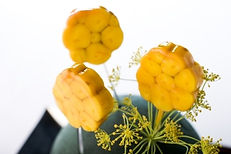
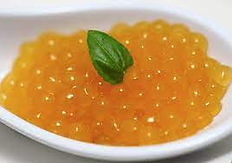
Not all of these substances used in molecular cuisine are new, as they have been used for some time in oriental cuisine and are widespread in the food industry. Soft spheres of liquid already exist in nature, as you will see in the free pantry. In my opinion, the real novelty of molecular gastronomy lies in the innovative presentation and in the possibility of changing the consistency of the raw material, exploiting one's creativity in the kitchen, according to a culinary project and a tendency towards artistic gastronomy.
So while we can make significant progress in the kitchen and experiment with new ones, we can't say that there are completely "new" ingredients or revolutionary culinary principles. Everything we discover is a revelation of what has been present in the vast and rich world around us.




THE BOOKLET

